
Understanding Business Structures and Challenges
Creative agencies come in all shapes and sizes. From small boutique firms to mid-sized agencies that manage multiple clients and service offerings. The size and structure of a creative agency significantly influence its daily operations, revenue growth, and long-term scalability. Small agencies often operate with a lean, agile approach. However mid-sized firms have to balance efficiency with a growing team and expanded services.
As agencies evolve, they can face unique challenges at each stage of growth. Small agencies will often struggle with resource constraints and unpredictable cash flow. They can also struggle with scalability limitations. Mid-sized agencies contend with operational complexity and streamlining chaotic workflows, all while trying to maintain a healthy and successful company culture.
Understanding these differences is crucial for creative agency owners who want to navigate growth successfully and implement the right tools and strategies in order to stay competitive.
Whether an agency remains small and specialized or wants to expand into a full-service firm, technology plays a critical role in supporting sustainable growth. By leveraging the right tools—such as agency management software like FunctionFox—creative businesses can overcome common roadblocks, improve efficiency, and position themselves for long-term success. In this article, we’re going to explore the key differences between small and mid-sized agencies, their financial trends, operational challenges, and how the right technology, like FunctionFox, can help creative agencies at every stage thrive.
So let’s do a bit of a breakdown of both small agencies and mid-sized agencies.
Small Creative Agencies
Small agencies, often defined as having fewer than 10 employees. This size of agency focuses on specialized services and offers highly tailored solutions. But they do face capacity constraints. They tend to be more agile and flexible in their operations. These agencies thrive on close client relationships and personalized services. However, they often struggle with resource limitations, which make scalability a challenge. With leaner teams, employees wear multiple hats (sound familiar?), which can be both an advantage and a hurdle when managing workloads.

Mid-Sized Agencies
Mid-sized agencies, typically ranging from 10 to 50 employees, have much more established processes and greater financial stability than small-sized agencies. These agencies can offer a broader range of services and take on far more clients simultaneously. However, as they scale, they encounter those painful growing pains that include things such as maintaining a consistent company culture, managing a larger team, and ensuring streamlined workflows across departments.
When we prepared this year’s Industry Report, we polled agencies of all sizes and service offerings. We found that 84% of those agencies we polled reported having 50 or fewer employees. This helped us realize that boutique firms are becoming more and more prominent—meaning that there’s a lot of agility around challenges faced by both small and mid-sized creative agencies.
Comparison Table: Small vs. Mid-Sized Agencies
| Factor | Small Agencies (<10 employees) | Mid-Sized Agencies (10-50 employees) |
| Business Structure | Flat hierarchy, flexible roles | More defined roles, structured teams |
| Client Relationships | Personalized service, direct interaction with leadership | Account managers and team-based service |
| Service Offerings | Specialized services, niche expertise | Broader service range, potential for full-service offerings |
| Financial Growth | Unpredictable cash flow, reliance on project-based work | More stable revenue streams, mix of retainer and project work |
| Technology Usage | Limited tools, often manual tracking | Investment in agency management software and automation tools |
| Challenges | Resource constraints, scalability, workload management | Maintaining company culture, team coordination, efficiency at scale |
Financial Trends: How Revenue Growth Compares Across Agency Sizes
Revenue trends differ widely based on agency size. Small and mid-sized creative agencies face distinct challenges and opportunities when it comes to their financial growth. While both types of agencies aim for profitability and sustainability, their revenue models and cash flow stability look very different. Which means their financial strategies often look very different as well.
- Revenue Stability and Growth Patterns
Small agencies are often reliant on a handful of clients, so they frequently experience fluctuating revenue. Many of these agencies operate on a project-based model, where income is dependent on the number of contracts secured at any given time. This unpredictability can unfortunately make long-term financial planning pretty difficult, especially if a major client ends a contract unexpectedly. And a major client is a big deal—these sorts of clients can make a majority of the income.
While some small agencies find stability by securing long-term retainers, many struggle to establish consistent revenue streams in the early years. As a result, revenue growth for these small agencies can be uneven. It can be rapid in some months and stagnant in others.
Mid-sized agencies, on the other hand, tend to experience far more predictable revenue patterns. As they expand their client base and service offerings, they often adopt a mix of project-based work and retainer agreements. Retainers can provide a stable foundation, ensuring a steady cash flow each month, while project-based work adds opportunities for higher revenue spikes. With more clients and diversified services, mid-sized agencies are better positioned to weather economic fluctuations and shifts in client demand. However, their operational costs also increase, requiring careful financial planning to maintain profitability.
- Profitability Challenges and Cost Considerations
For small agencies, balancing revenue with operational costs can be an ongoing challenge. When you have lean teams, expenses are typically lower (yay!), but the pressure to maintain steady cash flow remains high (boo!). Since small agencies often rely on word-of-mouth referrals and organic client acquisition, they may struggle with lead generation and business development. Also, smaller agencies may not have the budget for specialized financial management tools. This can lead to reliance on spreadsheets or basic accounting software—which can limit financial oversight.
Now let’s look at mid-sized agencies. While they benefit from increased revenue, these agencies must manage higher overhead costs, which include payroll, office space, and software subscriptions. As teams grow and processes become more complex, financial management becomes more crucial. This is to make sure that growth does not outpace profitability. A solid financial strategy is necessary here. Without one, a mid-sized agency can quickly find itself in a position where revenue increases but profit margins shrink due to rising expenses.
- Leveraging Financial Tracking Tools for Better Decision-Making
To maintain profitability and ensure sustainable growth, agencies—both small and mid-sized—absolutely must leverage agency budget tracking tools. FunctionFox, for example, offers agency management software that is designed to help creative agencies monitor revenue, track expenses, and even see profitability in real-time. It can even integrate financial tracking with time management and project tracking. This means that creative agencies can get much deeper insights into where they are most profitable. And where there may be inefficiencies that are cutting into margins.
For small agencies, using financial tracking tools can give them greater visibility into project costs. With this data, these agencies can better price their services correctly and avoid undercharging. And for mid-sized agencies, these tools can help analyze profitability across different service lines. They can also optimize resource allocation and identify trends that inform future business strategies.
Agencies that utilize the right technology can improve their revenue stability and manage their cash flow effectively—regardless of their size. A robust financial management practice is absolutely key to snagging that long-term financial success.

How Team Size Impacts Service Offerings and Operations
- Small Teams
Small agencies tend to have fewer employees, which means they’re often specializing in very specific niches to differentiate themselves. Team members juggle multiple responsibilities and hats, from creative work to account management. While this does foster innovation, it can lead to burnout. Small teams are highly adaptable and can pivot quickly to meet their client’s needs, but their limited bandwidth can often mean they’ve got to be selective about the projects they take on. Large, complex projects can strain resources and impact overall efficiency.
Additionally, small teams benefit from close-knit collaboration and strong internal communication. However, the downside here is that if one key team member leaves, it can create significant workflow disruptions. If a small agency wants to mitigate this, they’ve got to build scalable processes and invest in automation tools. These can help streamline administrative and creative tasks so the team can focus on the work at hand.
- Mid-Sized Teams
Now, mid-sized agencies have larger teams, which means they can expand their offerings. For instance, they can incorporate strategy consulting, video production, or even full-scale digital marketing. More staff members mean a greater capacity to take on larger clients and higher-budget projects. As these agencies grow, maintaining operational efficiency becomes a challenge. They require better-defined workflows, clearer role definitions, and stronger project management structures.
Mid-sized agencies also face risks that are associated with operational bottlenecks. As their teams expand, communication gaps can emerge. This leads to inefficiencies in project execution. In order to counteract this, structured workflows and centralized communication platforms become absolutely critical. If teams want to stay aligned and work more efficiently, they’ll need to implement some standard operating procedures (SOPs) and training programs.
Another challenge mid-sized teams often face is balancing workload distribution. When there are more specialized roles, there is more potential for siloed departments. Cross-functional collaboration is essential here. Agencies that invest in agency project management solutions can better allocate resources and avoid any bottlenecks in their workflow.
We recommend using an agency management platform like FunctionFox that can streamline operations. This allows for efficient collaboration across growing teams. With features such as time tracking, project management, and real-time reporting, these tools help agencies maintain productivity when they can allocate resources effectively and avoid bottlenecks that can slow down growth.
FunctionFox’s ability to centralize project tracking and reporting means that mid-sized agencies can maintain transparency across teams. Automated time tracking and task assignments cut down on administrative burdens and allow creative professionals to focus on delivering high-quality work. Additionally, these tools offer scalability, which means that your creative agency can grow seamlessly without outgrowing your operational systems.
By leveraging the right tools and strategies, both small and mid-sized agencies can optimize their team structure and service offerings in order to maximize efficiency and revenue growth.
The Role of Technology in Scalability
Technology is an absolutely critical factor in how creative agencies scale. The right tools can mean the difference between growth and stagnation. Let’s take a look at some key technologies for agency growth—no matter the size.
- Project Management Software
Tech tools like project management software keep timelines and deliverables on track and on budget.
- Time-Tracking Tools
And add some time-tracking tools to the mix and you can make sure that you’re profitable by monitoring those billable hours.
- Client Management Platforms
And then integrate a tool that manages your clients and pipeline and you’ve enhanced your communication and collaboration.
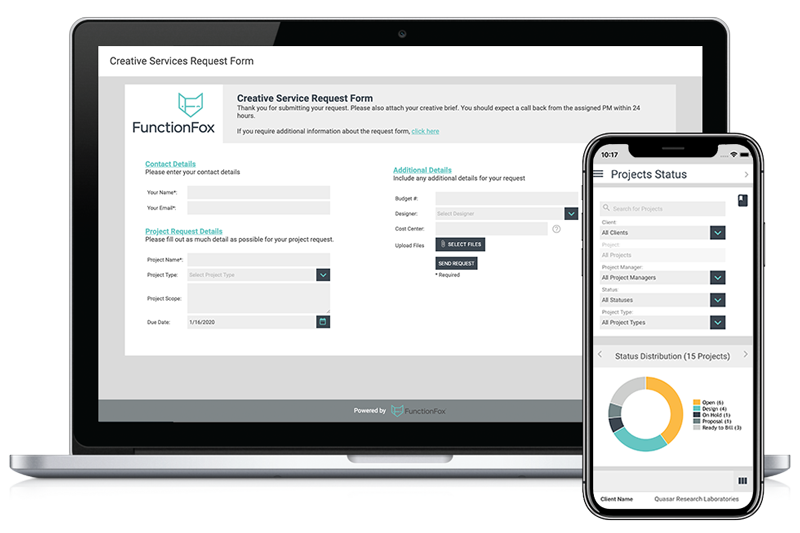
And guess what? FunctionFox integrates all of these capabilities, helping agencies manage projects, track time, and optimize workflows in one easy-to-use system.
Tools and Strategies for Growth
It doesn’t matter whether you’re running a small boutique firm or a mid-sized agency. Either way, you have to adopt the right strategies if you want long-term success. Let’s take a look at a few tools and strategies that can help your agency grow.
- Streamline Operations
The most important thing you can do in order to streamline your operations is to implement standardized workflows. This can greatly increase your agency’s efficiency. Use tools like FunctionFox that can centralize project and task management. And remember above when we mentioned the integration of financial tools with project management? Yep, that increases efficiency, too.
- Leverage Data for Decision-Making
If you want to make the right decisions (and not just go with your gut), then you’re going to need to track key performance metrics like project profitability. You can generate reports that can identify areas for improvement. And guess what? FunctionFox can help you create those reports in real time!
- Invest in Scalable Technology
Agency management tools are game-changers when it comes to maximizing your growth. We obviously recommend utilizing FunctionFox’s agency management tools to maintain efficiency at every growth stage.
Scale Smart with FunctionFox
Growing a creative agency requires balancing a ton of things. Service expansion, team management, financial sustainability. Whether you’re a small agency looking to optimize processes or a mid-sized firm aiming for the next level, FunctionFox provides the tools to keep your business on track.
Ready to scale smarter? Reach out to FunctionFox today!