
You’ve probably heard this before: A client wants a new campaign turned around in “a couple of weeks.” The creative team knows it’ll be tight, but doable. But only if everything goes perfectly. Two rounds of revisions, a delayed client approval, and one unexpected design snag later, that “two-week” project has stretched to six. The team’s stressed, the client’s frustrated, and the budget’s looking grim.

If that scenario sounds familiar, you’re not alone. Creative agencies of all sizes struggle with estimating project timelines accurately. Even the most experienced project managers can underestimate how long work will take, especially when creative variables and client feedback are involved.
Project timelines affect your agency’s profitability, trust, and your team’s sanity. When you nail your estimates, you protect your margins, avoid burnout, and build stronger relationships with clients who learn they can count on your word.
In this post, we’ll explore why creative projects so often run off schedule, how to use data and past performance to sharpen your estimates, and ways to balance realism with flexibility.

Why Project Timelines Go Wrong
Before you can improve your estimates, you have to understand what’s breaking them. Most timeline issues aren’t caused by laziness or inexperience. They stem from the unique dynamics of creative work. Projects evolve, clients shift direction, and internal teams juggle competing priorities. Here are the biggest culprits behind inaccurate timelines.
Unrealistic expectations from clients
Clients rarely see what goes into a creative project beneath the surface. To them, a logo might seem like “just a few sketches,” or a website redesign might feel like “a few new pages.” The solution isn’t to push back aggressively. It’s to educate and align. Show clients what’s involved in each phase, highlight dependencies, and make the timeline part of the conversation, not a footnote.
Scope creep and shifting requirements
Often, a client adds a few “small” requests, like an extra landing page, an alternate version of the ad, or “just one more round” of feedback. The key here is change management. Every creative agency needs a process for how new requests are logged, evaluated, and approved.
Use a simple internal rule: if it wasn’t in the original scope, it needs a new estimate. This helps both your team and the client see the true cost of “just one more thing.”
Poor internal visibility
When project managers lack access to reliable data, timelines become educated guesses at best. That’s why time tracking is so critical. The data your team records today becomes the foundation for tomorrow’s estimates. The more data you collect, the more accurate your forecasts become and the less likely you are to be surprised halfway through a project.
Team bandwidth and competing priorities
Even if your estimate is perfect on paper, execution can fall apart if your team is overloaded. Agencies often run multiple projects simultaneously, which means shared resources can become bottlenecks.
To avoid this, project managers need a clear view of who’s available and when. Tools like FunctionFox let you see your team’s workload in real time so you can assign projects and tasks realistically, not ideally.
The Science Behind Better Estimates
If estimating timelines were purely a matter of instinct, experienced project managers would never miss a deadline. But creative work doesn’t run on gut feeling alone. To consistently deliver accurate estimates, you need a repeatable, data-informed process that blends structure with insight.
Let’s look at the practical ways you can bring more science into your timeline estimation and how to use your project data to make every future estimate smarter than the last.
Start with historical data
The single most effective way to improve your estimating accuracy is to start with what you already know. Every completed project leaves behind information: how long each task took, who worked on it, where bottlenecks appeared, and how your actual timeline compared to your original plan.
Without this data, project estimates often rely on wishful thinking or anecdotal memory, and that’s where trouble starts.
FunctionFox’s time tracking and reporting tools make it easy to access this kind of insight. With just a few clicks, you can pull reports that show average task durations by role, project type, or client, helping you forecast with confidence instead of assumptions.
Break projects into micro-tasks
One of the most common mistakes in estimating is thinking too broadly. When you estimate a whole project phase, you’re skipping over dozens of smaller tasks that each take time and coordination.
Breaking projects into smaller, more detailed components gives you a clearer picture of the real workload. For example, instead of estimating “Logo Design — 40 hours,” break it down like this:
- Brand research – 5 hours
- Sketching and concept development – 10 hours
- Refinement and revisions – 15 hours
- Final file prep and delivery – 10 hours
That breakdown does two things:
- It exposes the hidden steps that often get overlooked.
- It makes it easier to assign accurate timelines based on real past performance.
FunctionFox supports this approach through task lists and project templates. Once you’ve mapped out your micro-tasks for one project, you can duplicate and adapt that structure for similar future projects.
Account for dependencies and delays
Even the most efficient teams can get stuck waiting for client feedback, creative approvals, or external deliverables. These dependencies often introduce unplanned gaps that blow up your carefully crafted timeline.
To prevent that, you need to map out your project’s interdependencies early. Ask questions like:
- Does Task B depend on Task A being completed first?
- Who needs to approve each milestone before the next phase can start?
- Are there client review periods or meetings that could delay progress?
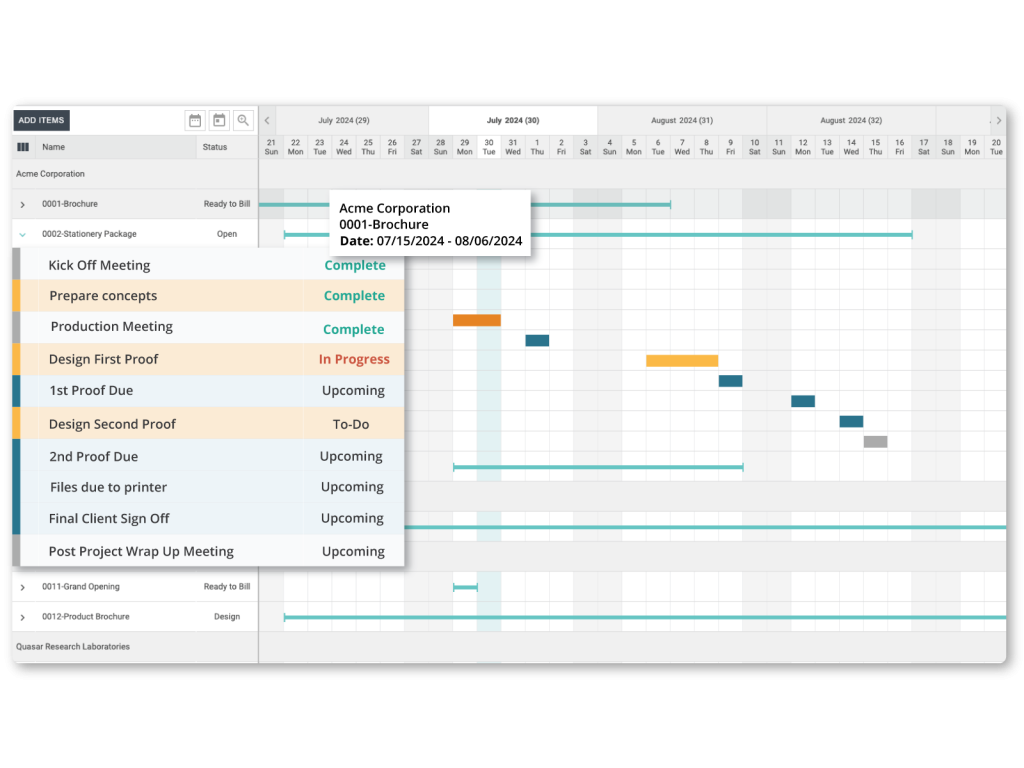
Visual planning tools such as Gantt charts or milestone calendars can make these relationships easy to see. FunctionFox’s project scheduling features allow you to plot dependencies and visually identify where tasks overlap or where they might conflict.
Use past variance to improve forecasting
No matter how detailed your estimate, your actual results will occasionally vary. That’s not a failure, it’s feedback. The gap between estimated and actual time is one of your most powerful learning tools.
After each project, take a few minutes to review:
- Where did your timeline differ from reality?
- Were those delays caused by internal issues, client delays, or inaccurate assumptions?
- Is there a consistent pattern across certain project types or clients?
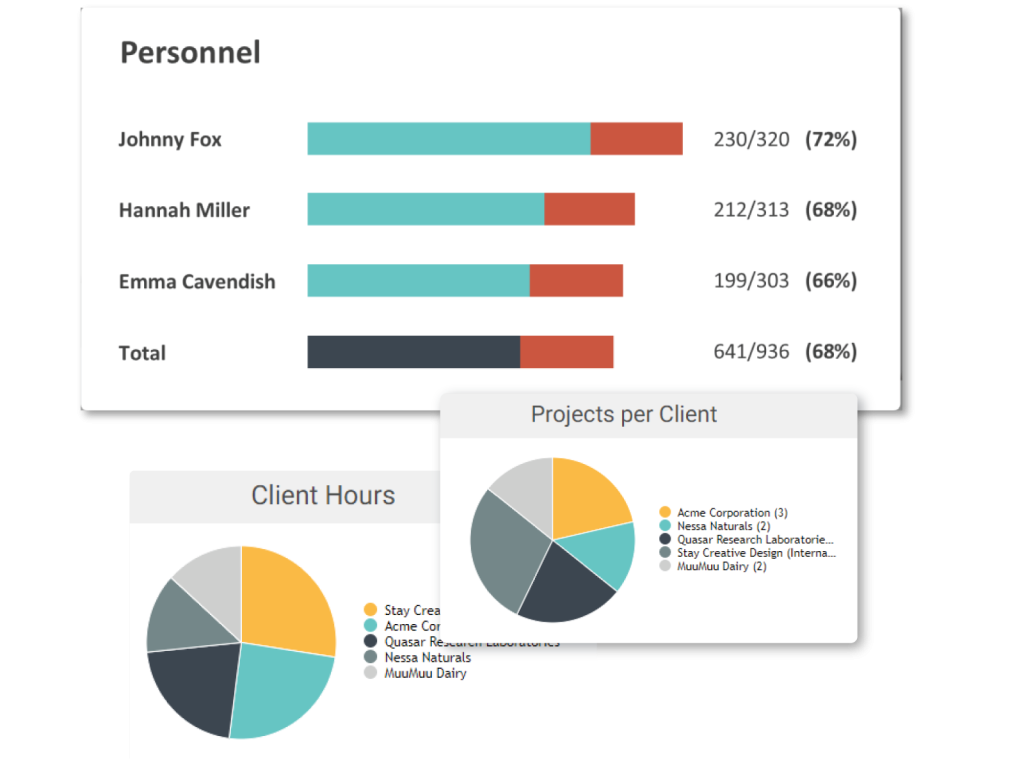
FunctionFox’s Actual vs. Estimated reports simplify this process by showing exactly where projects ran long (or short). You can spot patterns at a glance and adjust accordingly, turning every project into a training opportunity for better forecasting.
Lean on standardization
Once you’ve identified what works, standardize it. Consistency is the backbone of accuracy. Standardized estimating templates and workflows prevent you from reinventing the wheel with each new project and help ensure that everyone across your agency is estimating using the same logic and baselines.
Consider creating:
- Project-type templates: e.g., Website redesign, Brand identity, Social media campaign.
- Role-based task time averages: Designers, copywriters, developers, etc.
- Standard review cycles: So approvals and revisions are consistently factored in.
FunctionFox supports this kind of standardization with its project templates and custom task lists, letting you replicate successful estimates across clients or campaigns with just a few clicks.
Involve the right people early
Data and process are crucial, but accuracy also comes from involving the people who will actually do the work. Too often, estimates are made in isolation by project managers or account leads, without input from the designers, writers, or developers responsible for delivery.
A better approach is collaborative estimation. Gather input from each discipline during the planning phase. Ask:
- What potential challenges might extend this task?
- What kind of review or feedback is typical for this type of deliverable?
- Are there dependencies or blockers we should plan for?
This not only improves accuracy but also creates team buy-in. When team members help shape the estimate, they’re more likely to respect and stick to the timeline later on.
The Art of Balancing Realism and Flexibility
Truly mastering project estimation requires more than technical precision. It demands judgment, the ability to anticipate what’s likely to go wrong, build in space for the unexpected, and communicate those realities with confidence and tact.
Build in buffers (and use them wisely)
Creative projects are unpredictable. Maybe the concept phase takes longer because the team finds a better idea midstream. Maybe client feedback takes an extra week. Maybe a team member gets sick right before delivery. You can’t plan for every variable, but you can create breathing room.
The key is transparency within your team, even if not always with the client. Everyone should know where the buffer lies and what it’s for. That way, if delays start to appear, you can use the buffer strategically rather than scrambling for extensions.
In FunctionFox, you can track these buffers explicitly by creating internal milestones that arien’t client-facing. This keeps your delivery plan honest internally while preserving flexibility externally.
Communicate early and often
If there’s one rule that separates seasoned project managers from stressed-out ones, it’s this: bad news gets worse with time.
Timelines slip for all kinds of reasons, but silence is what turns a small delay into a client crisis. The earlier you communicate about risks, dependencies, or shifting priorities, the easier it is to maintain trust.
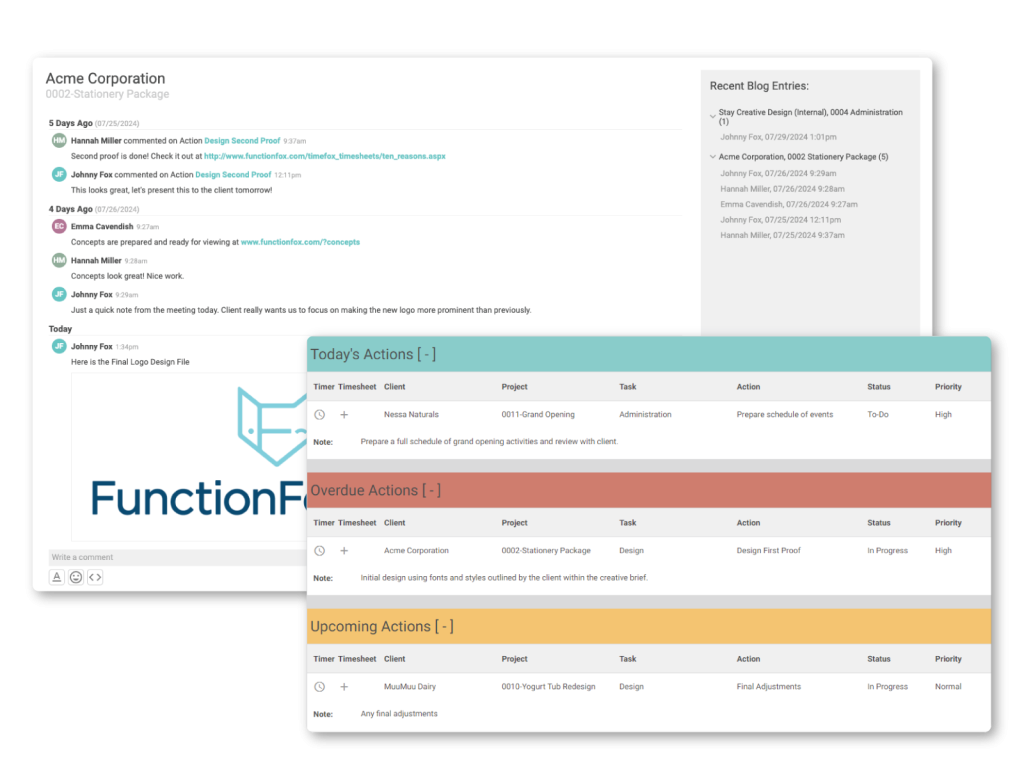
FunctionFox’s project status reports and dashboards make it easy to stay transparent. You can share summary views with clients or internal stakeholders so everyone sees progress in real time.
Align your estimates with creative reality
Creative work doesn’t always follow a linear process. Some projects evolve as ideas develop. Others hit unexpected walls during concepting or execution.
Rigid timelines suffocate creative quality. Overly loose ones lead to inefficiency. The balance lies in creating structured flexibility, giving your team enough room to explore, but within a defined boundary.
When you track creative cycles in FunctionFox, you can start identifying patterns. Maybe your design team consistently hits their best concepts by day three, or maybe certain clients always need an extra review round. Those insights help you build timelines that match creative flow, not just deadlines.
Don’t underestimate approval cycles
One of the biggest hidden threats to a project timeline is approval time. Clients rarely realize how much delay happens on their end, between gathering feedback, securing stakeholder sign-offs, and sending revisions back.
Build this into your estimates from the start. Instead of saying, “We’ll send the first draft on Monday and expect feedback by Wednesday,” ask, “What’s your typical internal review process like?” You might discover it takes a week or more, and planning for that upfront makes everyone look more organized later.
Adding dedicated “client review” milestones in FunctionFox helps visualize this process clearly. Each approval point becomes part of the timeline, not an afterthought. It also makes it easier to communicate when delays stem from the client side with data to back it up.
Track, review, and refine
Even the best estimates are hypotheses. The only way to make them better is to test and adjust over time. That’s why the most effective project managers treat every completed project as a learning opportunity.
This doesn’t have to be formal; a short debrief after the project with your team can surface valuable insights. FunctionFox makes this reflection easy with built-in Estimated vs. Actual reports. You can quickly see which tasks ran long and which came in under budget, helping you refine your next round of estimates with concrete data.
Over time, this habit builds institutional knowledge. Your team becomes more self-aware, your timelines more realistic, and your client relationships stronger. That’s the long-term payoff of mastering the art and science of estimating.
Estimating as a Competitive Advantage
Accurate project timelines are a competitive differentiator. Agencies that consistently deliver on time and within scope don’t just keep clients happy; they build reputations for reliability that win repeat business.
With the right systems in place and the insights available through FunctionFox, every project you complete makes your next one more predictable, more profitable, and more sustainable.
Interested in trying out some of these FunctionFox features? Reach out to us today for a free demo!