
For creative agencies, retainers are supposed to represent stability. It suggests steady revenue, consistent work, and predictable client relationships. But really, most retainers aren’t as “set it and forget it” as you might think. Over time, scopes expand, expectations shift, and client demands evolve. A contract that once felt balanced can quietly turn into a source of stress, burnout, or lost profit.
Most agencies already track time. But few take full advantage of what that data reveals about how retainers perform, where overages happen, and how client needs have changed since the agreement was first signed. When used strategically, time data becomes more than an administrative requirement — it’s the key to understanding your agency’s workload, capacity, and profitability in real terms.
In this post, we’ll explore how agencies can use time data to improve the way they structure, manage, and renew client retainers. We’ll look at common pitfalls, practical ways to interpret time reports, and how insights can drive better pricing and client transparency. And we’ll show how tools like FunctionFox make it simple to track and analyze that information, as well as act on it.

The Problem with “Set It and Forget It” Retainers
Retainers are designed to bring predictability. For many agencies, that monthly check from a loyal client feels like a safety net. However, retainers only work when the value exchanged remains equal on both sides. And as you probably know, that’s not always the case.
The problem? Client needs rarely stay the same. New campaigns needs pop up, strategies evolve, and small “one-off” requests slowly accumulate. A 40-hour monthly commitment can easily creep toward 60 or 80 hours before anyone notices.
When time isn’t actively monitored, the illusion of stability masks an underlying imbalance: your team is working harder for the same revenue. You might not see it right away, but over months or quarters, the gap between contracted hours and actual time spent widens. And that cuts directly into your profitability.
Why Agencies Don’t Catch the Drift
If this problem sounds familiar, don’t worry, you’re not alone. Creative agencies often have good intentions when setting up retainers. You get clear scopes, defined deliverables, a comfortable workload estimate. But as real work begins, subtle shifts start to occur, and time tracking alone isn’t enough to detect them unless the data is regularly reviewed.
There are three main reasons this drift goes unnoticed:
- Lack of granularity. Many teams track time at the project level but not the task level. That makes it hard to see where the overages are happening. Is it client communication? Revisions? Admin? Without that clarity, you can’t address the root cause.
- Busy project managers. When schedules are full, PMs naturally focus on delivery, like getting assets out the door and keeping clients happy. Reviewing time reports often falls to the bottom of the to-do list until it’s too late to make adjustments.
- Awkward client conversations. Even when overages are noticed, some agencies hesitate to raise the issue. They fear damaging the relationship or losing the contract. But delaying the conversation only makes it harder later, especially when the imbalance becomes significant.
The Cost of Not Monitoring Retainers
The financial impact of unmanaged retainers can be staggering. When teams consistently over-service without realizing it, the agency essentially subsidizes the client’s work. Every extra hour spent without compensation eats into profit margins that are already tight in most creative environments.
But the costs aren’t only financial. Over-servicing strains your team, which then creates stress and resentment. Designers or account managers who feel like they’re “always doing more than what’s paid for” eventually burn out or disengage. Or worse, straight up quit. Meanwhile, clients become accustomed to that extra effort and assume it’s part of the deal.
That combination of depleted team energy and trained client expectation makes renewals difficult. When you try to reset pricing or scope later, clients often push back, because they’re confused about why they’re suddenly being asked to pay more for what they see as the same service.
It’s a classic creative agency paradox: the better your team performs under the old terms, the harder it is to justify raising them.

Turning Time Data into Insight: What to Track and Why
Most creative agencies already have a goldmine of information sitting quietly inside their time-tracking system. The challenge isn’t collecting it. The real challenge is knowing what to look for and how to use it. When analyzed correctly, time data can reveal where your retainers drift, which of your clients are draining the most resources, and how your team’s capacity aligns with contractual obligations.
But not all time data is created equal. In order to get actionable insight, you need to track in a way that connects directly to your retainer structure, client expectations, and business goals.
Below, we’ll break down the five key dimensions of time data to focus on, and how to use each one to improve the health of your retainers.
Track by Task, Not Just Project
One of the most common mistakes creative agencies make is tracking all time against a single project or client-level bucket, such as “Client X Retainer.” While that’s easy to set up, it hides the details that actually matter.
Instead, break your retainers down into task-level categories that mirror your real workflows:
- Creative production (design, writing, coding, etc.)
- Client management (meetings, emails, feedback)
- Revisions and quality control
- Internal coordination or admin
This extra layer of detail helps uncover patterns. You might find that “creative” hours are steady month-to-month, but “client management” has doubled due to longer feedback cycles. Or that revisions take up 25% of total time. This is a clear sign that the review process needs structure.
When you can see time distribution by task type, you gain the ability to fix inefficiencies rather than just note that “we went over hours again.”
In FunctionFox, setting up these task categories is simple. And once they’re in place, you can filter reports to see exactly how much time your team spends in each area. That’s the foundation for smarter decisions later.
Spot Patterns in Client Behavior
Once you’ve got the right task breakdown, the next step is to look for trends. Retainers are living relationships.They change as clients’ needs and behaviors change. By reviewing time reports monthly or quarterly, you can start to answer questions like:
- Are certain clients consistently requesting more revisions than others?
- Do some accounts have more unplanned meeting time or last-minute requests?
- Are delays coming from internal bottlenecks, or are clients holding up approvals?
These behavioral insights tell you more than just “who takes the most time.” They reveal why certain retainers drift. For example, if Client A always logs an extra 10 hours due to extended approval chains, you know it’s a process issue and not a pricing one.

And if Client B’s hours spike every third month due to seasonal campaigns, that’s a valuable data point for forecasting and resource planning.
Pro tip: Use FunctionFox’s client and project-level comparison reports to see how time distribution changes across your portfolio. You may find that one client’s habits are skewing your team’s overall workload and taking time and effort away from other clients.
Compare Projected vs. Actual Hours
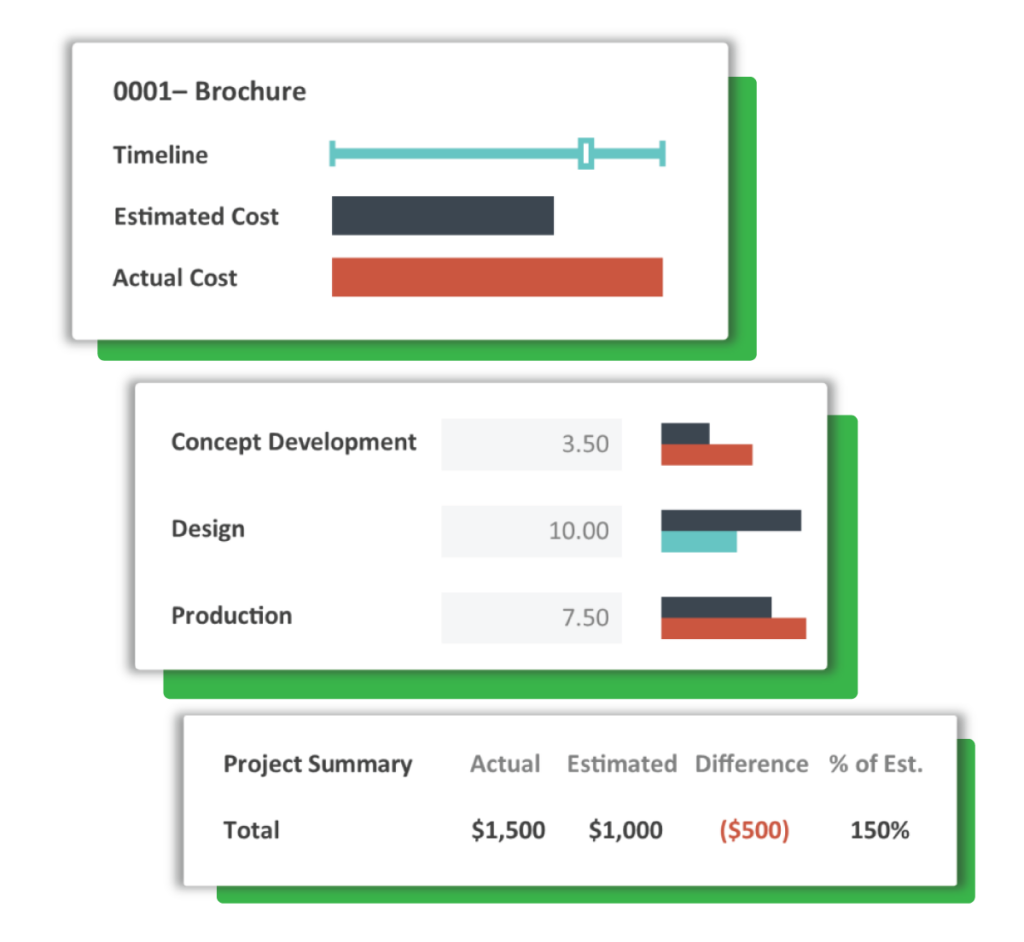
No matter how experienced your team is, every retainer starts with an estimate, your informed guess about how much time typical deliverables will require. Time data turns that guesswork into some actual measurable evidence.
Start by comparing your projected monthly hours against your actual logged time for each retainer. Over time, these comparisons will paint a pretty clear picture for you:
- Which of your clients or services are routinely underpriced?
- Which of your retainers have stabilized into a sustainable rhythm?
- Which ones are ballooning month after month?
For example, a marketing agency might have scoped 60 hours per month for social content creation. But over the past six months, time reports show a consistent average of 78 hours. That’s a 30% overage, and it’s not an anomaly anymore.
This kind of visibility transforms renewals from guesswork into data-driven discussions. You can walk into a client meeting and say, “We’ve been averaging 18 more hours each month due to additional creative rounds and strategy time. Let’s talk about how to rebalance the scope or adjust pricing to reflect the real workload.”
With FunctionFox, you can automate much of this process. Budget tracking tools let you set estimated hours per project or retainer, and alerts notify you when you’re approaching those limits, so you can act before an overage becomes a problem.
Measure Internal Efficiency, Not Just Output
Time data isn’t just about the client. It’s also about your own business’s operations. The same reports that show how much time a client consumes can also reveal why that time is being consumed.
When you analyze your data by team member, phase, or department, you can spot internal inefficiencies like:
- Too many revisions caused by unclear briefs or missing information.
- Bottlenecks where certain tasks or roles consistently run behind.
- Duplicated effort between departments or team members.
These insights are gold for improving processes. Maybe you need to tighten your creative brief template, streamline approval steps, or adjust how tasks are assigned. Every hour you save internally increases the value of your retainers without raising prices.
In FunctionFox, utilization reports show exactly how team members spend their time and how their hours align with project budgets. When you combine that with client-facing reports, you get a full 360-degree view: both how time is spent and how effectively it’s used.
Use Utilization Rates to Balance Workloads
Healthy retainers don’t just protect profitability. They’re also going to protect your team’s capacity. Time data helps you see whether your workloads are balanced or lopsided across your clients and staff.
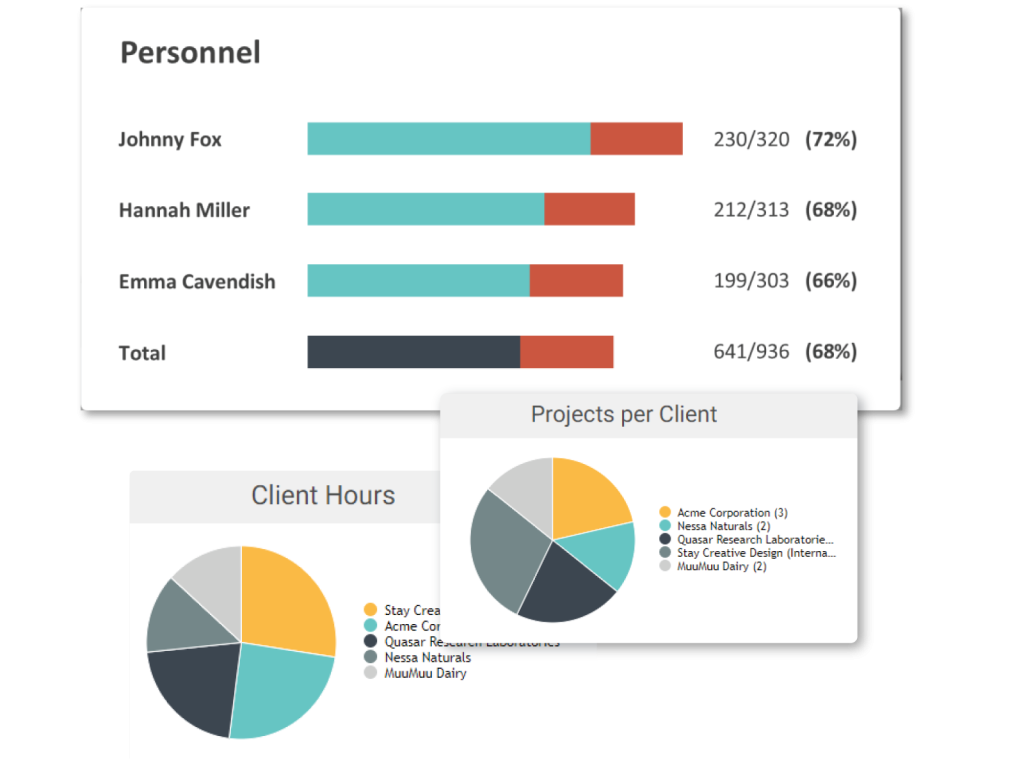
If one designer logs 90% of their time on a single client while others hover at 50%, that’s a pretty clear sign that resources need rebalancing. If an account manager is spending half their week in client meetings, they may not have enough time for some of the strategic work you need them to do.
Tracking utilization rates over time helps make sure no one is burning out and that your agency isn’t overly reliant on a single retainer for revenue. Ideally, you want consistent, predictable workloads across the team… and that’s something that’s hard to spot without accurate time tracking.
FunctionFox’s reporting tools make this easy by showing team-wide utilization at a glance. You can see which employees are overbooked, which retainers are taking more than their fair share of hours, and where capacity might be opening up for new clients.
In Summary
When used intentionally, time data does more than prove where the hours went. It reveals the story of how your retainers actually function: which ones are stable, which are quietly draining resources, and where opportunities exist for smarter planning.
In short:
- Tracking by task tells you where time goes.
- Spotting patterns tells you why it goes there.
- Comparing projections vs. actuals shows you how retainers drift.
- Measuring efficiency helps you fix internal issues.
- Monitoring utilization protects your team’s capacity.
Each piece of that puzzle supports better conversations, both internally and with your clients. Instead of vague impressions (“this account feels heavy”), you’ll have clear, objective insights (“we’re averaging 25% more time on revisions than planned”).
Turn Your Time Data into Smarter Retainers
Tracking hours is just the start. FunctionFox helps you turn that data into actionable insight.
With built-in reports, dashboards, and budget tracking, you can see exactly where every hour (and dollar) is going, so you can:
- Monitor your retainer health in real time,
- Spot scope creep before it becomes a problem, and
- Confidently adjust pricing and capacity based on real project data.
Whether you manage five retainers or fifty, FunctionFox gives you the clarity to make better decisions. For your clients and your team.
Reach out to us to schedule your free demo and see how easy it is to make your time data work harder for you.